Blog
Quitting Social Media 6 Days A Week
I don’t need to tell you about the negative impacts of social media on our mental health and wellbeing. This has been a much discussed topic in the news and in the medical research world.
I don’t need to tell you about the negative impacts of social media on our mental health and wellbeing. This has been a much discussed topic in the news and in the medical research world. We have enough evidence showing that social media is not harmless. What I want to share with you is my own personal experience with dramatically cutting back on my social media time in the hopes that I may trigger some reflection for you about your own relationship with this technology.
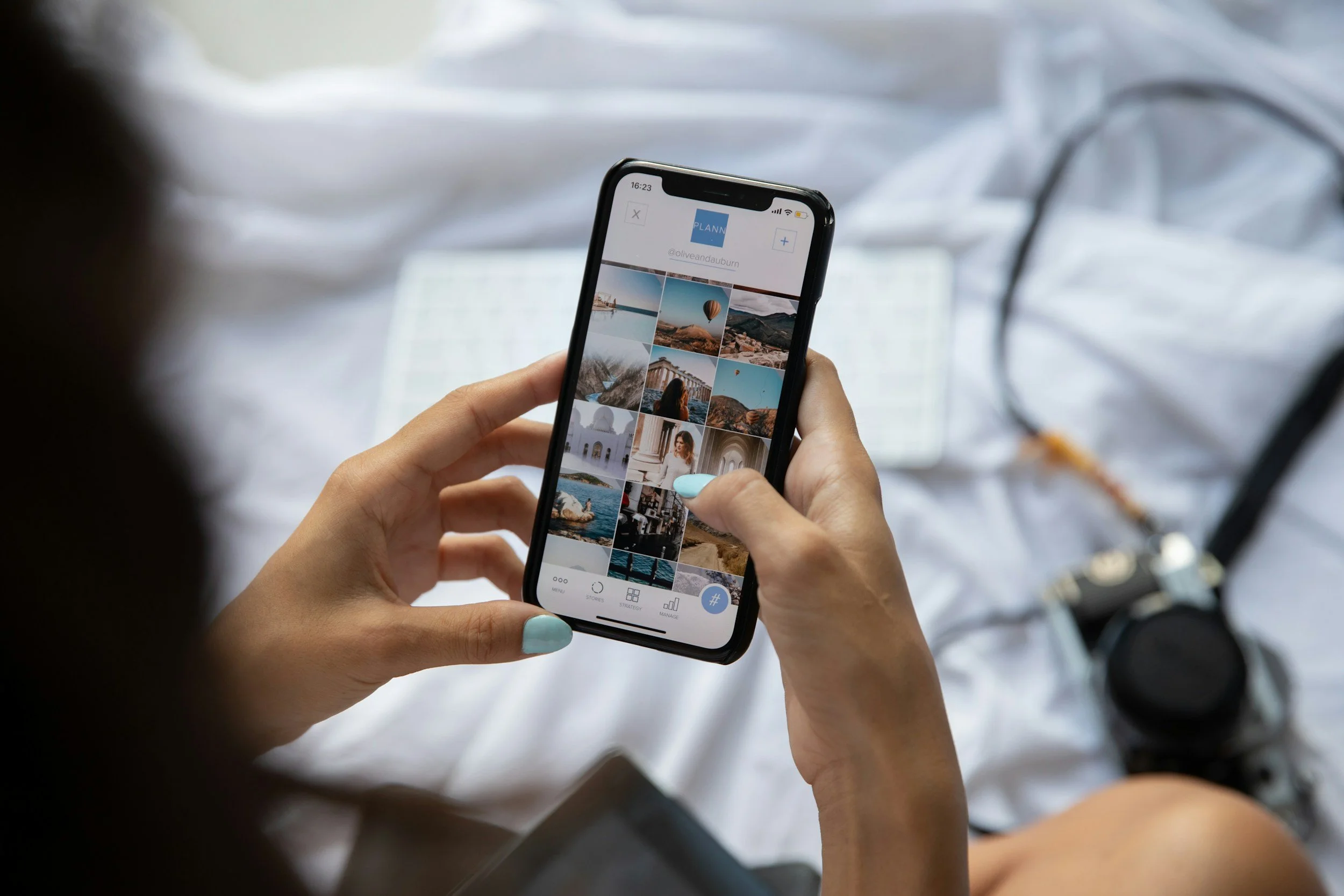
Earlier this year I decided that I only want to engage with social media once a week. That meant no scrolling or posting or responding to messages outside of that one day a week. This decision was inspired by the realization that social media was taking up too much of my mental space and personal time. These realizations will probably sound familiar to you:
Instead of getting fully absorbed in an event or outing, I was taking pictures with the intention of posting on social media. As much as I tried to convince myself that this wasn’t impacting my experience, it was. I would frantically rush to capture picture-perfect moments and zone out at the end of the event to post away. It undeniably took me out of the moment.
My kids would often catch me scrolling during our family time together. I would miss out on little things they said to me and have to ask them to repeat themselves. It was nothing catastrophic and I was still very present with my kids overall, but this is not the model that I want my kids to learn from me.
As much as I like to think of myself as immune to comparison traps…I’m not. Like most humans, when I see others winning awards or achieving great things I can be hard on myself for not accomplishing “enough”. With social media you get to scroll past dozens of big wins each day (or hour)–more than you would encounter in normal life. I don’t think we were wired for something like that.
There were many other reasons but the point is, daily social media exposure was doing more harm than good. The benefits outweighed the risks and, in medicine, when that happens, it’s time to make some changes.
I decided to cut social media down to one day per week. There were many slip-ups and many days when I felt like I had to “make an exception” for this or that reason but now I’m pretty committed to it. I eventually started scrolling other apps (email, photos etc.) because my brain did not know how to kick the scrolling habit so I set limits on those apps too.
I often find myself actually dreading my social media day. I approach it like a hot oven–I just want to get in and out and close the door. It almost always leaves me feeling worse off.
Here is what reducing social media has done for me:
It cleared up the brain fog. We blame hormones, diet, inflammation and a myriad of other things for causing brain fog. These are all valid causes but I suspect social media scrolling is a big contributor as well.
I re-awakened my love for other hobbies like reading, journaling and watching actual movies (spoiler: they’re more entertaining and thought-provoking than 7 second videos).
It made me more present with my family and everyone in my life. Looking back, I’m horrified that I used to carry out conversations with people while scrolling through social media–that feels so rude now.
I found time to exercise more regularly and be more productive in general. Those little scroll sessions add up and eat away at your time.
I feel less doom and gloom while still being aware of global issues. For news, I’ll check out my local news website a couple times a week and that’s more than enough to keep me up to date with local, national and global events.
My mind is….quieter and I think that’s the most precious change. What a blessing it is to feel relief from the excess noise. I can hear myself think more and I think that is essential to living a richer and more intentional life.
I don’t think I’ve said anything shocking here. I’m sure you could have guessed at all of these benefits. I think the surprising thing to me is that having daily cut-offs (like banning all social media before 10 am) was not enough for me. I tried that and I found having full days without it was more impactful.
There are many people who rely on social media as part of their job and I hope they have found their own balance that supports their wellbeing. There are also many of us who think we need social media more than we actually do (I was one of them). For those of you in that category, I want to share that reducing social media did not interfere with my business. I don’t have a lot of followers and views but I still have a busy practice and that’s what counts for me (although, I recognize that this may not work for other types of businesses that rely on having high social media engagement). It was useful to work with experts in the past who helped me show up on social media more strategically so that I can make the most of my engagement when I am on there.
I’m actually considering reducing my social media further to just twice a month in the new year. Overall it’s been a fun experience and I want to see what more will happen to my mind and my life if I give myself that opportunity.
How Stress Affects Your Memory
Brain fog is a common complaint that I see in my practice. It can involve a number of symptoms like feeling scattered and having a hard time focusing but one of the most frustrating symptoms is memory issues. By memory issues, I’m not referring to the more major lapses in memory that are observed in dementia. More severe memory loss needs to be thoroughly evaluated. Many of my patients have more subtle memory issues that nonetheless have a meaningful impact on their lives.
A number of factors can negatively affect memory. Stress is an important one to consider. Research in the field of neuroscience has found that chronic stress can change the structure of the brain. It can cause damage to nerve cells and reduced communication channels between nerve cells. These changes occur in parts of the brain that are important for memory such as the hippocampus.
Part of the blame may be due to one of the “stress hormones” called cortisol. Cortisol is released in response to stressful triggers to help the body cope until the trigger is removed. It is a normal, healthy response when cortisol is elevated appropriately. Things go haywire when people are exposed to constant stress that leads to long term elevation of cortisol. Elevated cortisol may be one of factors that changes the brain in a way that interferes with memory. Chronic stress can be very overstimulating to the brain which can make it harder for the brain to form memories.
There are a number of ways that I help my patients deal with memory issues related to stress. My treatment plans typically include devising a good nutrition plan, exercise plan, daily healthy habits and natural remedies to help the body cope with stress better and improve memory. If you need support with brain fog, memory issues and stress management, book a free 15 minute phone consultation to learn more about how I can help you.
Beating Brain Fog and Improving Focus
Brain fog is not a medical term but it’s a term that nicely captures something that many people experience. Brain fog is that feeling of being spaced out and struggling to focus and engage. Have you ever read a book or listened to someone talk for several minutes only to realize that you didn’t absorb anything? Do you feel like you’re perpetually lost in thought? These are common signs of brain fog. When you have brain fog you might forget what you were just about to say or do, or whether you locked the door or packed your water bottle. It can leave you feeling disconnected from the world around you. These little mental slips are normal to an extent but if they’re starting to interfere with your quality of life it may be worth doing something about it.
If things feel like they’re getting out of hand, it’s important to discuss these issues with a health care provider who can assess for potential underlying causes like thyroid dysfunction, anemia, depression, anxiety, ADHD, digestive conditions or cognitive disorders.
Here are some important concepts that can help to improve your focus and clear some of that brain fog:
Mindfulness: You might feel like all this talk about mindfulness is getting repetitive, but useful things are worth repeating. I’m not only talking about doing meditation sessions (which is valuable), I’m also talking about doing your everyday tasks mindfully. Living mindfully involves focusing on one thing at a time rather that scattering your focus in a million different directions. If you’re watching TV, just watch TV. If you’re speaking to someone, just speak to them. If you’re writing something, just write. Don’t try to do these things while also texting, planning your response, thinking about something unrelated, checking emails etc. Practice single minded focus.
Nutrition: Many of my patients notice a huge improvement in their mental clarity when we clean up their diet. This usually involves reducing foods that spike blood sugar, moderating excessive carb/grain intake and increasing protein, good fats and nutrient-packed produce.
Exercise: Mental clarity is one of the first things to improve when you start increasing your exercise. The general recommendation is 150 minutes/week of aerobic exercise. This is the kind of exercise that gets you breathing faster to the point where it would be hard to sing if you wanted to or you have to pause to breathe when you try to talk.
Supplements: When relevant, I will sometimes use supplements to help people struggling with brain fog. My choices vary depending on the case. I will recommend certain supplements based on nutritional deficiencies, hormonal irregularities, digestive health and other components of your health history. But don’t just jump straight to the supplements and ignore the lifestyle things I mentioned above.
If you want a custom-fit plan for your brain fog so you can start interacting with the world with a fresh, clear mind, reach out to me and we can start bringing you back into focus.
My Approach to Gluten
It’s a common cliché to think that naturopathic doctors put all their patients on a gluten free diet. The term gluten describes specific proteins in plants like wheat, rye and barley. Gluten gives foods made from these grains a unique texture that is hard to mimic. This is why gluten-free breads taste so different from the breads we’re used to.
I don’t believe everyone needs to be on a gluten free diet and I only recommend it when I think it’s necessary. I also don’t believe that only those with celiac disease need to consider reducing gluten intake. There is a growing body of research on non-celiac gluten sensitivity although this research is still controversial right now. Wheat and gluten sensitivities have been associated with skin conditions like eczema, irritable bowel syndrome, chronic pain and even mood disorders.
I’ve seen a number of patients benefit from a trial of reducing gluten in their diet – even if they were already eating a healthy diet before. Personally, when I include gluten in my diet, I tend to get hives, seasonal allergies, my thyroid levels go out of whack, I get more fatigued, more “brain fog”, my mood suffers and I sometimes get mild joint pain. When I remove or even just reduce gluten, these symptoms all go away and I usually feel great.
It’s important to note that whenever I reduce my gluten, I try to avoid processed gluten free foods. A lot of these processed gluten free foods are not nutritionally valuable. I’ll have gluten free bread or gluten free treats here and there but for my staples, I prefer to stick to foods that are minimally processed and naturally gluten free like rice, sweet potato, quinoa, chickpeas, etc.
My latest gluten free stretch of time was 2017 - 2018. I was able to be almost gluten free for a big chunk of the year. I didn’t really miss it at all. However, towards the end of 2018, I started to feel deprived. As I mentioned in my article on intuitive eating, it’s really important to me that I eat healthy without feeling deprived. That’s why I decided to reintroduce gluten back into my life for now. I still try not to have it every day, but I am having it more than in 2017. The mild hives have returned, and I do feel a slight dip in my energy but I’m ok with temporarily paying this price so I can feel happy about my diet and less deprived. I know that in time I’ll be open to cutting gluten out again.
And that’s how it goes for me. I’m aware of my gluten intolerance and I fluctuate my level of gluten intake based on my motivation and sense of deprivation. My intolerance symptoms are mild enough that I can live with them when they come back. If they get more severe, then I might prefer to be more strict with my gluten avoidance.
The point is that the power is in my hands to use my awareness of my intolerance as I see fit. When I tell my patients that they may benefit from reducing certain foods in their diet, I will never sit there and judge them if they don’t follow my recommendations to a tee every single moment of their life. You have to know yourself and your relationship with food. You have to know what you’re willing to do and what you’re not ready for yet. I’ve had many patients tell me that they do want to change their diet but only to a certain extent. That’s ok. I will meet you where you’re at and we can change as much as you’re ready for and save the rest for another time.
My job is to arm you with the awareness of all the things that you can do to benefit your health. Your job is to communicate to me what you’re ready for and what you’re not ready for. Our job together is to use this information to build a plan that works for you on every level.